The Next AI Wave Isn't ChatGPT — It's 'Agentic AI'. And Africa's Governments Are Already Writing the Rules

Ask most people what AI means in 2026 and they will tell you ChatGPT. They will tell you about a chatbot that writes essays.
That is already old news.
Across boardrooms in Lagos, Nairobi, Johannesburg, and increasingly Harare, the conversation has shifted. The new buzzword is agentic AI — and unlike most tech buzzwords, this one is going to matter to every business, every household, and every government in Africa.
Here is what it actually means, why it is different, and why governments from Lagos to Cape Town are already writing laws to control it.
The Difference Between Generative AI and Agentic AI
Generative AI — like ChatGPT, Claude, or Gemini — produces things. Text. Images. Code. Summaries. You ask, it generates.
Agentic AI does things. It books. It pays. It negotiates. It places orders. It manages calendars. It chases up suppliers. It files compliance forms.
Imagine the difference between a personal assistant who drafts an email for you versus one who handles your entire week without asking permission. That is the gap.
The first is a tool. The second is something closer to a junior employee — except it works 24/7, never gets sick, and costs a fraction of a human salary.
Why This Matters More Than ChatGPT Ever Did
ChatGPT changed how we create. Agentic AI changes how things happen.
When AI starts taking actions on your behalf — moving money, signing things, talking to other companies' AI agents — the implications go far beyond convenience.
Three sectors agentic AI is breaking first:
1. Financial services. AI agents managing micro-loans, automatically rebalancing portfolios, negotiating with collections, processing claims. Cost of a finance officer drops 80%.
2. Procurement and supply chain. AI agents tracking inventory, raising purchase orders, comparing supplier quotes, handling routine vendor communication. Buyers and procurement managers will spend less time on admin and more on strategic supplier relationships.
3. Healthcare administration. AI handling appointment scheduling, insurance pre-authorisation, follow-up reminders, prescription refills. The administrative load of healthcare in Africa is enormous. Agentic AI absorbs huge chunks of it.
None of this is hypothetical. All three are running in production somewhere on the continent right now.
Why Governments Are Suddenly Paying Attention
Here is the thing about an AI that takes actions: when it goes wrong, somebody has to be liable.
If your AI agent accidentally pays the wrong supplier, who is responsible? If it signs you into a contract under disadvantageous terms, can you escape it? If it shares your medical data with another AI agent during a routine task, has it broken privacy law?
These questions are no longer academic. They are arriving in front of African regulators every week.
And two countries are leading the response.
Nigeria: The Digital Economy Bill
Nigeria has pushed forward an enforceable digital economy framework that, among other things, sets explicit standards for:
It is the first serious attempt in Sub-Saharan Africa to write rules for AI agents specifically — and it will shape regulation across the continent.
South Africa: POPIA Meets AI
South Africa is approaching the same problem through its existing data protection law, POPIA, and emerging AI extensions. The angle there is more privacy-led — focused on what AI agents can and cannot do with personal data without explicit, ongoing consent.
South Africa's regulatory approach is also influencing how multinationals operating across SADC structure their AI rollouts. If the SA rules are tight, the easier path is to apply those rules across the entire region — including Zimbabwe.
Where Zimbabwe Stands
Zimbabwe has a National AI Strategy that nods at governance — but the detailed, enforceable rules are not yet there.
Translation: Zimbabwean businesses building or using agentic AI are operating in a regulatory grey zone. That is not necessarily bad in the short term — it means freedom to experiment. But it also means risk: when the rules eventually arrive (and they will), early adopters who built sloppily may have to rebuild.
Two specific predictions worth taking seriously:
1. Zimbabwe will adopt elements of both the Nigerian and South African frameworks within 24 to 36 months. SADC harmonisation pressures make this almost inevitable.
2. Consent flows and data localisation will become formal requirements, especially for AI agents handling banking, healthcare, and government data.
Plan accordingly.
What Every Zimbabwean Business Should Do in the Next 90 Days
Concrete actions, in order of urgency:
1. Map Where AI Is Already Acting In Your Business
Most companies are surprised by this audit. AI is probably already taking actions inside your operations — through CRM automations, marketing platforms, accounting software, customer service bots. Write it down. Know what is happening before you make it bigger.
2. Define Clear Boundaries For What AI Can Do Autonomously
Some decisions should never be fully automated. Hiring, firing, signing major contracts, large financial transfers, sensitive customer communications. Pick your line and write it down.
3. Build Consent and Logging Into Every AI Agent
If your AI agent does anything on behalf of a customer, you need to be able to prove: what consent was given, when, what action was taken, by which agent, with what result. Audit logs are not optional in the agentic era.
4. Track Regulatory Movement
Subscribe to updates from POTRAZ, the Ministry of ICT, and credible African policy publications. The rules are coming. You want 90 days warning, not 9 days.
5. Train Your Team On The Difference
Most of your team probably thinks AI is ChatGPT. Educate them on what agentic AI is, where you are already using it, and what their role is in overseeing it. Human oversight is going to be the most valuable skill in your organisation for the next decade.
The Big Risk Nobody Is Talking About
Here is the thing nobody is saying loudly enough: when agentic AI talks to other agentic AI, prices, contracts, and decisions can move very fast — often faster than humans can follow.
Imagine your supplier's AI agent negotiating with your AI agent over delivery schedules. In principle, this is efficient. In practice, both agents could optimise toward outcomes neither of you actually wanted, because the agents were trained on subtly different goals.
That is not a far-future scenario. It is happening in pockets right now in global supply chains.
Zimbabwean businesses adopting agentic AI need to think carefully about which decisions are appropriate to delegate to a machine and which absolutely require human judgement.
Default to caution. You can always automate more. Reversing damage from bad automation is expensive.
Why This Is Actually Good News
I have spent a lot of this article warning about risks. Let me end with the upside.
Agentic AI levels the playing field between Zimbabwean businesses and global competitors more than any technology since the internet itself.
A two-person startup in Bulawayo, properly equipped with agentic AI, can now operate with the capacity of a 20-person team. They can chase quotes, manage suppliers, handle customer service, run marketing campaigns, and process orders — all simultaneously.
That used to be impossible without serious capital. It is now possible with thoughtful software, the right tools, and clear human oversight.
The Zimbabwean entrepreneurs who learn to build, oversee, and govern AI agents over the next two years will compete with anyone in the world.
Final Word
Agentic AI is not the next ChatGPT. It is the technology that comes after chatbots, and it will reshape work, regulation, and commerce far more than generative AI did.
Africa's governments are moving fast — faster than people realise. Nigeria and South Africa are leading. Zimbabwe will follow, and when it does, the businesses that prepared early will dominate.
Get ahead of this. Audit your AI usage now. Build oversight into everything. Train your team. Track the rules.
Work With KuWeX Studios
If you want help auditing where AI is already operating in your business, designing safe agentic workflows, or building compliant AI systems that align with emerging African regulation — that is the work we do every day. WhatsApp +263 719 066 891 or email info@kuwexstudios.co.zw.
Related Articles
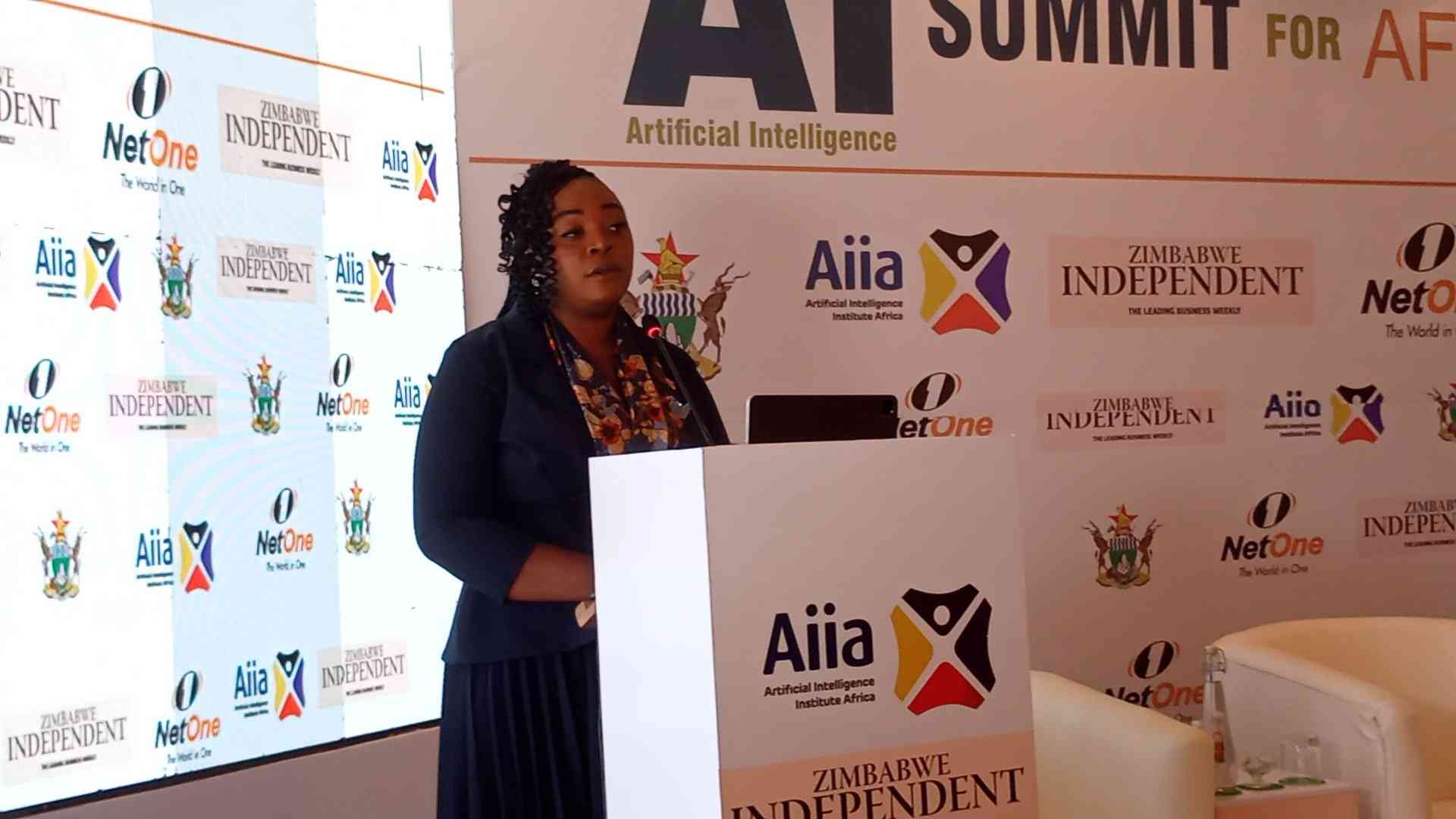
What the Zimbabwe National AI Strategy Means for NGOs, Corporates, and Government
April 5, 2026
Cybersecurity, Data Privacy, and Trust in Zimbabwe's Digital Economy
March 28, 2026Zimbabwe Is Entering the AI Economy: Will Your Business Lead or Be Left Behind?
April 14, 2026Grow Your Business Online
Get a free consultation with KuWeX Studios. We help Zimbabwe businesses succeed online with web design, SEO, and digital marketing.